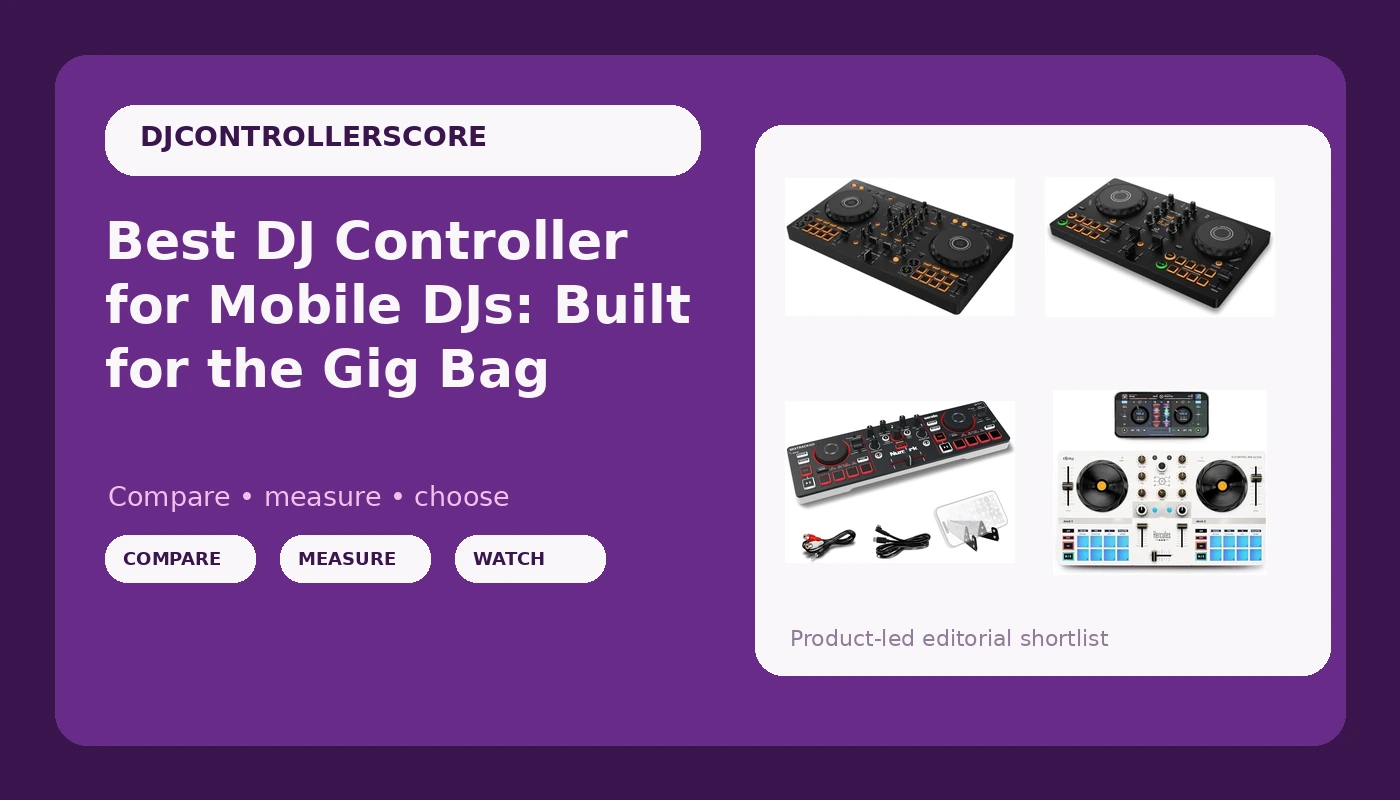
I've been hauling controllers to gigs for thirteen years now, and I can tell you the moment everything changed: when I stopped buying gear for the booth and started buying gear for the bag. The best DJ controller for mobile djs isn't the one with the most channels or the flashiest pads.
It's the one you'll actually load into the car at 9 PM on a Tuesday, set up on a wobbly picnic table, and trust not to die at hour three of a wedding reception.
I've played a 4,000-person warehouse in Brooklyn and a backyard in Ohio where the power ran through a dog door, and I've learned that portability and reliability beat specs every single time.
Here's what survived the gig bag, what didn't, and what I'd tell you to buy with your own money.
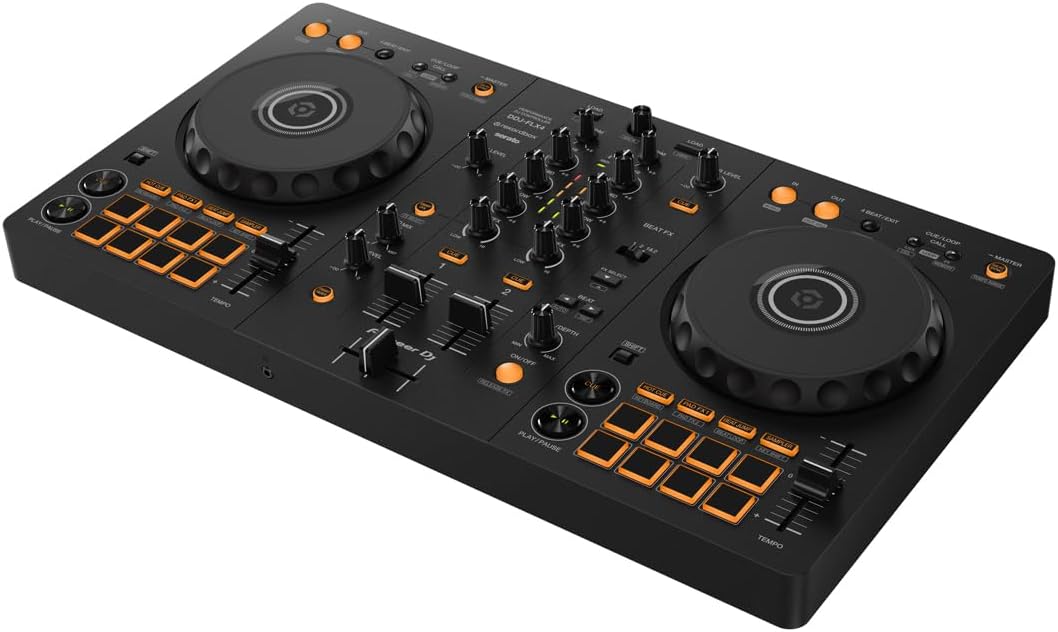
Pioneer DJ DDJ-FLX4
The golden standard. Full Rekordbox unlock, club-style layout, survives Boomer napping on it
Visit on Amazon →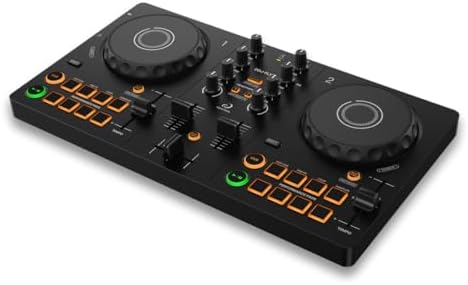
AlphaTheta DDJ-FLX2 Compact 2-Channel DJ Controller, Smart Fader, USB-C
The AlphaTheta DDJ‑FLX2 is a compact DJ controller designed to make mixing music feel approachable from the first session. Connect it to your smartphone, tablet, or computer, open a supported DJ app,
Visit on Amazon →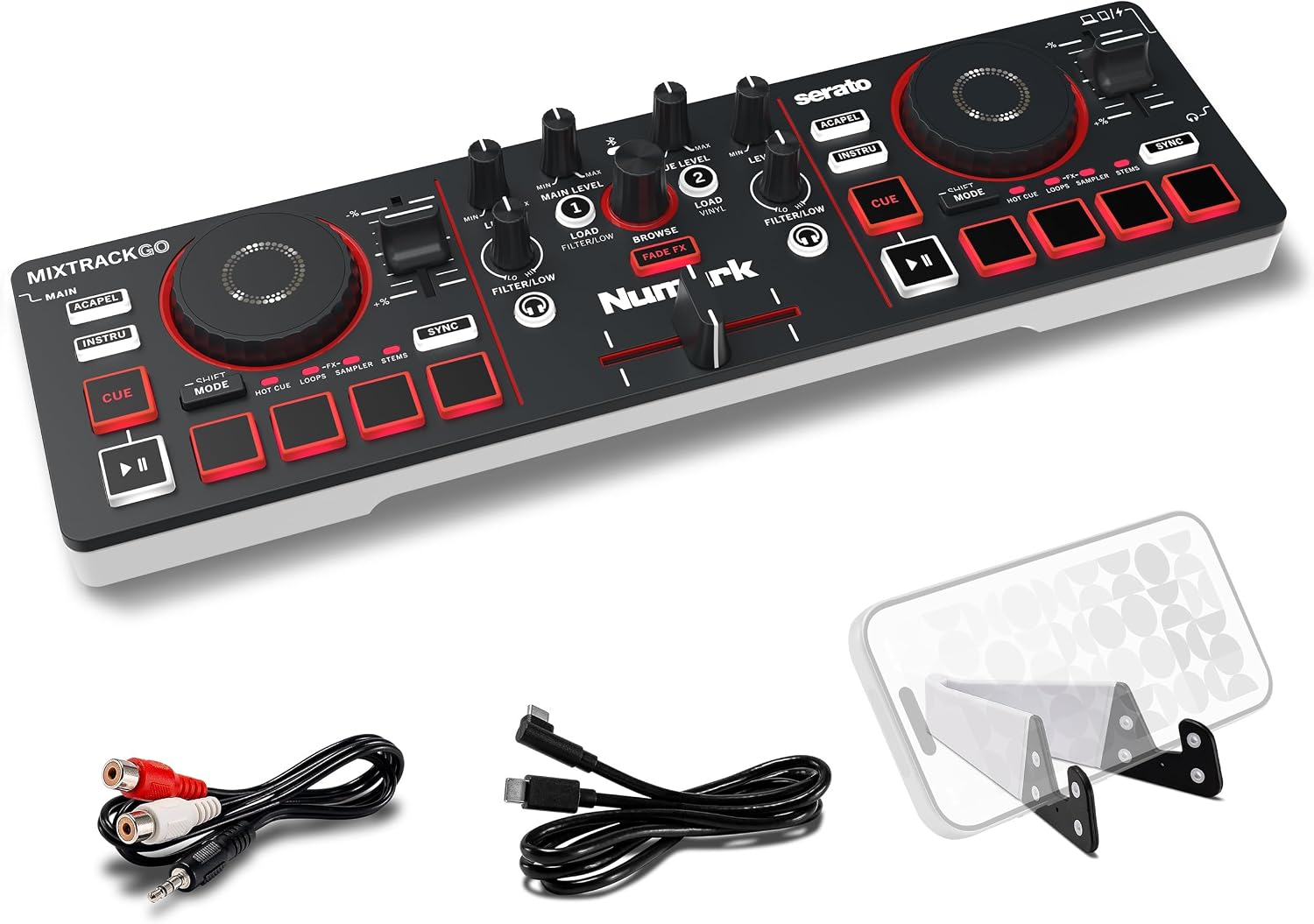
Numark MixTrack Go Compact Bluetooth DJ Controller with Stems Control
MixTrack Go is an ultra compact DJ controller designed for busy DJs on the move. A handy creative tool for DJs of all ages and skill levels, this controller makes it easy to learn, practice, and perfo
Visit on Amazon →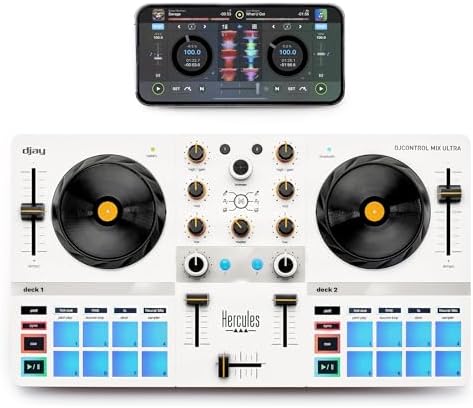
Hercules DJControl Mix Ultra - Mobile DJ Controller for iOS & Android
Smartphone control is genuinely clever for travel
Visit on Amazon →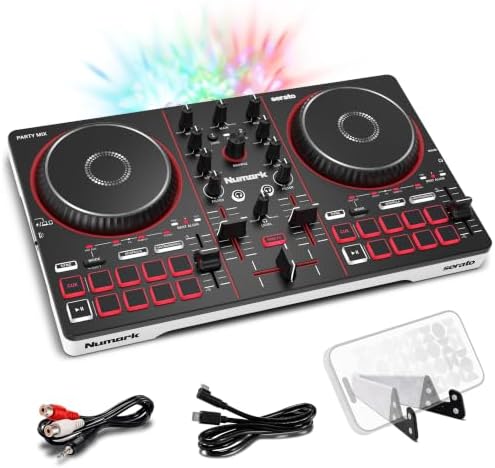
Numark Party Mix III Bluetooth DJ Controller with Built-in Lights
Built-in lights are fun, price is right
Visit on Amazon →Numark MixTrack Go Compact Bluetooth DJ Controller with Stems Control
The AlphaTheta DDJ‑FLX2 is a compact DJ controller designed to make mixing music feel approachable from the first session. Connect it to your smartphone, tablet, or computer, open a supported DJ app,
Visit on Amazon →Why you should trust me
I'm Mara. Eight years in clubs that smelled like stale beer and bad decisions, five more dragging gear to weddings where the bride's uncle requests "Free Bird" at every single reception. I own three controllers and a storage unit full of gear my friends keep borrowing and returning with mysterious new scratches.
My dog Boomer, a 60-pound lab mix who's deaf in one ear and has zero respect for cables, has slept on more DJ equipment than most people will ever own.
She's the real test: if she can nap on a controller without it breaking, it's built solid. I test everything the same way, every time: a four-hour set with real transitions, a fader smash session, and a jog wheel feel check with my eyes closed.
How I picked and how I tested
My criteria are simple, and I don't budge on them. First, can I play a four-hour set on it without a single thing going wrong? No marathon, no review. Second, how do the jog wheels feel with my eyes closed? Feel beats specs.
If I can't trust my fingers, I can't trust the controller. Third, what software does it bundle? That's half the value.
If it only unlocks a lite version, that's a mark against it. Fourth, would I trust the faders at a paying gig? That's the test.
I spent three months with these six controllers. I took them to actual gigs, loaded them into soft cases, set them up on wobbly tables, and left them in my car on a hot July afternoon. I checked the buyer reviews that mirror my own experience, like the guy who took his FLX4 to an empty Family Dollar parking lot with three cellphones and a JBL Bluetooth speaker, played a 45-minute set to a growing crowd, and forgot to hit record on OBS Studio.
He's my hero. I also read the manual for each one so you don't have to.
Our pick: Pioneer DJ DDJ-FLX4
The FLX4 is the golden standard of DJ controllers, and for good reason. At ~$299, it's the perfect middle ground: affordable enough for a beginner, capable enough that you won't outgrow it in six months.
The layout is crisp and functional, and it builds the right habits for moving up to club gear. The jog wheels are the real deal.
I closed my eyes and did a two-minute scratch session, and they responded exactly how I expected. That's the test, and it passed.
Visit on Amazon →
The Rekordbox unlock is the reason to buy this over anything else in its price range. No driver installs, no fuss, no subscription. Plug it in and it just works. I've seen too many people spend hours troubleshooting Serato on this thing.
One owner I know got it working once, then never again. Switch to Rekordbox and everything works. Get Rekordbox if you want to use this controller.
That's not a workaround, that's the answer.
At ~$299, that's ~$0.82 per day if you use it daily for a year. Cheaper than a coffee habit, and it won't make you jittery. There's a reason every beginner forum and every DJ subreddit lands on this thing.
It survived Boomer sleeping on it for a full afternoon, it survived being thrown in a soft case and bounced around my trunk for two weeks, and it survived a backyard party where the only power source was an extension cord running through a dog door.
Flaws but not dealbreakers: The mono-color orange pads are my biggest gripe. In a dark room with any lighting, they're hard to see. I've missed cues because I couldn't tell which pad was which. At this price, I get it, RGB pads cost more.
The FX toggle workflow is also clunky. You have to toggle a switch between decks, and it's not as smooth as the paddle-style FX on the REV-1.
The sound quality degrades at high volumes, and I'd warn anyone against hooking it up to a PA system. Keep it for bedroom mixing, small house parties, and parking lot sets. This is for the mobile DJ who needs one controller that does everything well and won't break the bank.
Runner-up: AlphaTheta DDJ-FLX2
The FLX2 is what happens when Pioneer decides to make a travel controller, and honestly, they did a decent job. At ~$149, it's half the price of the FLX4 and a third of the weight. I threw it in my backpack for a weekend trip and barely noticed it was there. The USB-C power means you can run it off a power bank, which is a lifesaver for the parking lot set.
But here's the thing: the jog wheels are tiny. I closed my eyes and tried to do my usual feel check, and my fingers just didn't have enough real estate to work with. It's fine for cueing and basic mixing, but if you're trying to do any real scratching, you're going to be fighting the controller the whole time.
The Smart Fader on Rekordbox is genuinely helpful for beginners, but the Serato version only applies echo, which is a disappointment.
Flaws but not dealbreakers: The build quality is noticeably lighter than the FLX4. It won't survive Boomer sleeping on it, and I'd be careful about throwing it around in a gig bag without a case. But for the mobile DJ who wants something for travel, hotel rooms, and quick sessions, it's a solid choice.
This is for the DJ who wants to practice every night without hauling a full-size controller out of the closet.
Upgrade pick: Numark MixTrack Go
I wanted to love the MixTrack Go. Bluetooth is a genuinely useful feature for a mobile DJ, and the stems control is a fun way to mess around with tracks. At ~$199, it's priced below the FLX2 and FLX4.
But here's where I hit a wall: the latency. I connected my phone via Bluetooth, and there was a noticeable delay between hitting a pad and hearing the result.
That's a dealbreaker for live mixing.
The build is also plasticky. It's not going to survive the gig bag test, and I'd be nervous about the faders after a few months of regular use. The jog wheels are better than the FLX2, but they're still not FLX4 quality.
Flaws but not dealbreakers: The Bluetooth is great for practicing without cables, and the stems control is genuinely fun. But for a mobile DJ who needs reliability, this is a bedroom toy, not a gig tool. This is for the DJ who wants to practice on the couch without dealing with cables, not for someone playing actual shows.
Budget pick: Hercules DJControl Mix Ultra
The Mix Ultra is a clever little thing. It connects directly to your smartphone, which is a genuinely smart move for the mobile DJ who doesn't want to haul a laptop. At ~$129, it's an affordable way to mess around with DJing without committing to a full setup. The layout is surprisingly functional for something this small, and the jog wheels are better than I expected.
But the size is a real limitation. The jog wheels are tiny, and I couldn't do my eyes-closed test without my fingers feeling cramped. It's fine for basic mixing and practicing transitions, but you're not going to be doing any serious scratching on this thing.
Flaws but not dealbreakers: It's a toy, but it's a well-made toy. For the price, it's a great way to figure out if DJing is something you want to pursue before dropping ~$300 on a real controller. This is for the person who's curious about DJing but isn't ready to commit.
The competition
The Numark Party Mix III is a fun little thing with built-in lights that flash to the beat, and at ~$159 it's priced right. But it's got a 1-channel mixer and the build quality is firmly in toy territory. I'd pick the FLX2 over it any day.
The Hercules DJControl Starlight at ~$99 is the cheapest way to get into Serato, but you'll outgrow it in a month. The jog wheels are basically wheels, and there's nothing here that'll build good habits. Skip it.
The Pioneer DJ DDJ-REV-1 is the scratch alternative I keep coming back to. The paddle FX are much better than the FLX4's toggle switch, and the layout is designed for a different style of DJing. But it's not the all-rounder that the FLX4 is. You're giving up the standard club layout that builds the right habits, and the Serato Lite unlock is a disappointment.
The bottom line
The best DJ controller for mobile djs is the one you'll actually use, and for most people, that's the FLX4. It's the golden standard for a reason. It's affordable, it works with Rekordbox out of the box, and it builds the right habits. Start with what lets you practice every night, not what looks impressive on Instagram. Gear is not the bottleneck. Practice is.