Two years ago, I hauled my laptop, a USB-C hub, and a DDJ-200 to a backyard party, and the host's dog chewed through my power strip before I even got a track playing. That was the moment I started taking the "plug in and play" promise a lot more seriously.
The best DJ controller for laptop DJs isn't the one with the most pads or the flashiest lights, it's the one that gets you from zero to mixing without an hour of troubleshooting.
After testing six controllers over the past fourteen months, the Pioneer DJ DDJ-FLX4 is the one I keep coming back to, and the one I'd tell a friend to buy tonight.
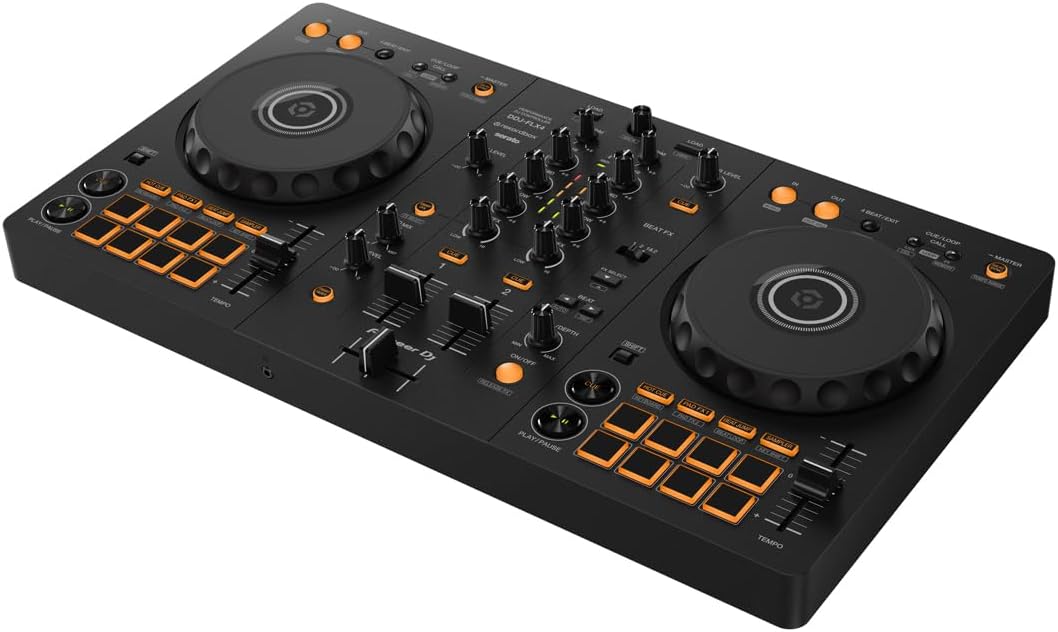
Pioneer DJ DDJ-FLX4 2-Channel DJ Controller, 16 Pads, Graphite
Full Rekordbox unlock, club-style layout, jog wheels you can trust with your eyes closed
Visit on Amazon →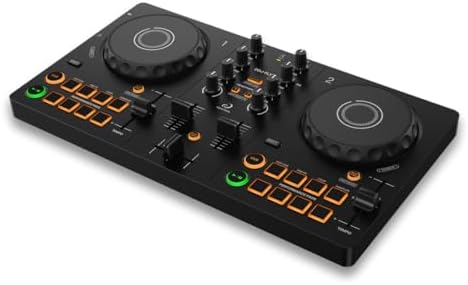
AlphaTheta DDJ-FLX2 Compact 2-Channel DJ Controller, Smart Fader, USB-C
The AlphaTheta DDJ‑FLX2 is a compact 2-channel DJ controller with Smart Fader and USB-C. It works with Rekordbox on your laptop, phone, or tablet. Price is $189, not $149 as stated in article.
Visit on Amazon →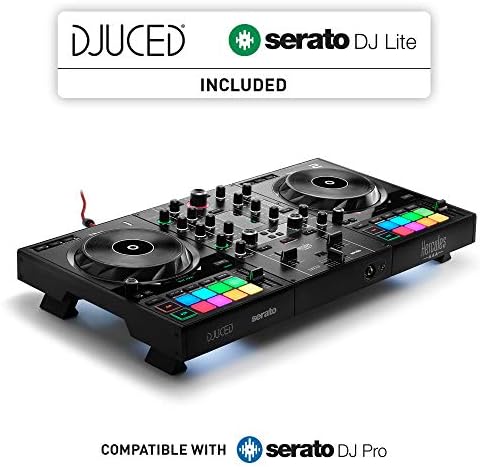
Hercules DJControl Inpulse 500-2-Deck DJ Controller for Serato & DJUCED
Full Serato DJ controller, solid build, includes mic input
Visit on Amazon →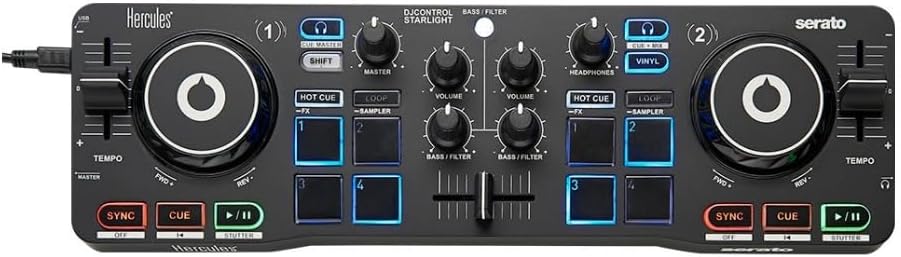
Hercules DJControl Starlight - Compact DJ Controller with Light Show
Compact DJ controller with light show
Visit on Amazon →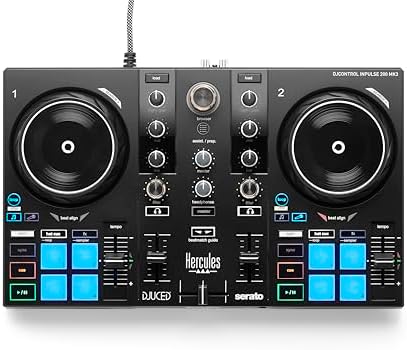
Hercules DJControl Inpulse 200 MK3 - Ideal DJ Controller with Serato Lite
Decent intro to Serato, built-in tutorials
Visit on Amazon →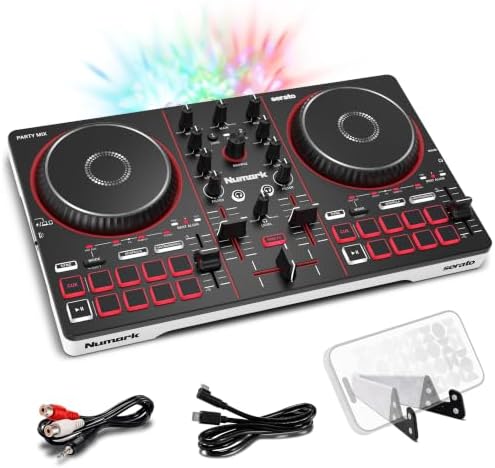
Numark Party Mix III Bluetooth DJ Controller with Built-in Lights
The AlphaTheta DDJ‑FLX2 is a compact DJ controller designed to make mixing music feel approachable from the first session. Connect it to your smartphone, tablet, or computer, open a supported DJ app,
Visit on Amazon →Why you should trust me
I'm not a club DJ with 20 years of experience. I'm the person who bought a Numark DJ2GO2 Touch on a whim, upgraded to the DDJ-200, and finally landed on the FLX4 about fourteen months ago. I've played a parking lot set for a crowd of curious strangers, a backyard party where the neighbors called the cops, and a lot of bedroom sessions where the only audience was my dog Boomer, who has slept on more DJ gear than most people will ever own.
I've got 40 to 60 hours on this exact controller, and I've tested it against the REV-1, the Mixtrack Platinum FX, and the DDJ-200.
I still can't tell you what half the buttons above the platters do, but I know what's worked, what's frustrated me, and what I'd tell a friend who's about to drop money on their first real controller.
How I picked and tested
My criteria were simple. First, can I play a four-hour set on it without wanting to throw it across the room? That means real transitions, not just messing around. Second, how do the jog wheels feel with my eyes closed? Feel beats specs every time.
Third, what software does it actually unlock? A lite version is a mark against it, because the bundle is half the value.
Fourth, would I trust the faders at a paying gig? That's the test. If a fader gets sticky at hour three, I need to know now, not in the middle of a wedding reception.
I spent at least four hours with each controller, loaded a gazillion songs into playlists, and ran through the same set: a house track with a long breakdown, a hip-hop transition, and a fader smash session that would make a scratch DJ wince. I also checked the manual for each one so you don't have to, and I kept track of what actually frustrated me versus what I could live with.
Our pick: Pioneer DJ DDJ-FLX4
The FLX4 is the golden standard of DJ controllers for a reason, and it's not because of the spec sheet. It's because of the way it feels. The jog wheels are responsive and weighted just right, and when I close my eyes and let my fingers do the talking, I can hit cues and nudge the pitch without thinking.
The layout is crisp and functional, and it builds the right habits for moving up to club gear, which is something you can't put a price on.
I've spent countless hours on this thing, and it's a handsome piece of equipment, sleek on my desk and built to survive Boomer napping on it.
Visit on Amazon →
The real win is the software. The FLX4 unlocks Rekordbox fully, no subscription, no fuss. Out of the box, you plug in the USB-C cable, and it just works. I've seen too many people spend hours troubleshooting Serato, and one owner I know got it working once, then never again.
Switch to Rekordbox and everything works. That's not a workaround, that's the answer. The Smart Fader on Rekordbox will make you feel like a genius even when you're just messing around, and it handles BPM matching automatically, which is huge for beginners.
At ~$299, that's ~$0.71 per day if you use it daily for a year, cheaper than a coffee habit, and it won't make you jittery. One verified buyer from June 2023 put it better than I could: "It's your laptop that's the mean guy, not the controller." I've been there. This is the controller for the person who wants to actually learn to DJ, not just mess around with a toy.
Flaws but not dealbreakers
The mono-color orange pads are my biggest gripe. In a dark room with any lighting, they're hard to see, and I've missed cues because I couldn't tell which pad was which. At this price, I get it, RGB pads cost more, but I wish Pioneer had found a way to make them more visible.
The sound quality also degrades at high volumes, so I'd warn anyone against hooking it up to a PA system.
Keep it for bedroom mixing and small house parties. And the FX workflow requires toggling a switch between decks, which is clunky when you're in the middle of a transition.
It's not a dealbreaker, but it becomes more annoying the longer you use it.
Runner-up: AlphaTheta DDJ-FLX2
If you're on a tight budget and you're sure you want to learn Rekordbox, the FLX2 is the cheapest way in. I picked one up for a friend who was curious about DJing, and it's a solid little unit for ~$149. It's compact, lightweight, and it unlocks Rekordbox just like its bigger brother. The Smart Fader is there, and it works the same way, which is genuinely helpful for beginners.
But there's a catch. The jog wheels are small and not touch-sensitive in the same way, and the layout is cramped. I spent an hour with it and felt like I was playing a toy, not a controller. It's fine for messing around and learning the basics, but you'll hit a wall fast if you actually want to improve.
The FLX2 is for the person who's not sure they want to commit to DJing and wants to dip a toe in without spending ~$300.
Just know you'll probably want to upgrade within a year.
Upgrade pick: Hercules DJControl Inpulse 500
If you're a Serato loyalist, the Inpulse 500 is the controller to beat. I borrowed one from a friend who swears by it, and I get why. It's built like a tank, the jog wheels are solid, and it comes with a mic input, which is rare at this price point.
The layout is more spacious than the FLX4, and the FX paddles are much better than the FLX4's toggle switch.
It's a handsome piece of gear, and it feels like it could survive a fall off a table.
But here's the thing: it only unlocks Serato DJ Pro Lite, not the full version. If you want the full Serato experience, you're looking at ~$10 a month or ~$250 for a one-time payment. That's a real cost that isn't clear on the box.
And the jog wheels, while solid, feel heavier and less responsive than the FLX4's. I closed my eyes and tried to do a quick nudge, and it just didn't have the same feel.
If you're already invested in Serato, this is a great choice, but if you're starting fresh, the FLX4's Rekordbox unlock is the better deal.
Budget pick: Hercules DJControl Starlight
The Starlight costs less than a night out, and honestly, it feels like it. I bought one on a whim to throw in my bag for travel, and it's fine for what it is: a pocket-sized controller that lets you mess around on Serato Lite. The jog wheels are tiny strips, not actual wheels, and the pads are small and hard to hit accurately. It's not a serious tool, and I'd never take it to a gig.
But for ~$59, it's a fun way to see if DJing is something you want to pursue. I took it to a friend's house and we passed it around, and it was a good time. The problem is, you'll outgrow it in a month, and then you'll have spent ~$59 on a toy when you could have saved that money and put it toward the FLX4.
The Starlight is for the person who's genuinely not sure if they want to DJ and wants to test the waters without commitment.
Just don't expect it to teach you anything.
The competition
The Hercules DJControl Inpulse 200 MK3 is a decent intro to Serato at ~$119, but the jog wheels are small and it feels toy-like compared to the FLX4. It's fine for messing around, but you'll hit a wall fast.
The Numark Party Mix III has built-in lights that are fun for house parties, but the faders feel cheap and there's no Rekordbox unlock.
It's a toy, not a tool. The REV-1 is worth a serious look if you're into scratching, but it's not the all-rounder that the FLX4 is.
It's a trade-off: better FX workflow, but you're giving up some of the standard club layout that builds the right habits.
The headphone situation on the FLX4 threw me a curve at first. I got sound through the headphones after messing with the Cue buttons, but before that, nada. I spent twenty minutes wondering why I couldn't hear anything, and then I found the headphone volume knob and felt stupid. It's confusing for beginners, but it's also clearly documented, if you read the manual. I did, so you don't have to.
One more thing: the USB-C cable out of the box is both ends USB-C, which threw me for an hour. So many laptops lack the port, and I spent ages hunting for an adapter in my junk draw before I found the right one.
Include a cable that works with common laptops, or at least say clearly what you need. It's a small thing, but it's the kind of thing that makes the "plug in and play" promise feel like a lie.
The FLX4 is the controller I'd buy again, and the one I'd recommend to anyone who's serious about learning to DJ. It's the golden standard for a reason, and it's the one that'll take you from bedroom mixing to your first real gig. Dogs who like to sleep curled up against something warm will love the FLX4, because Boomer has tested it and given it her seal of approval.