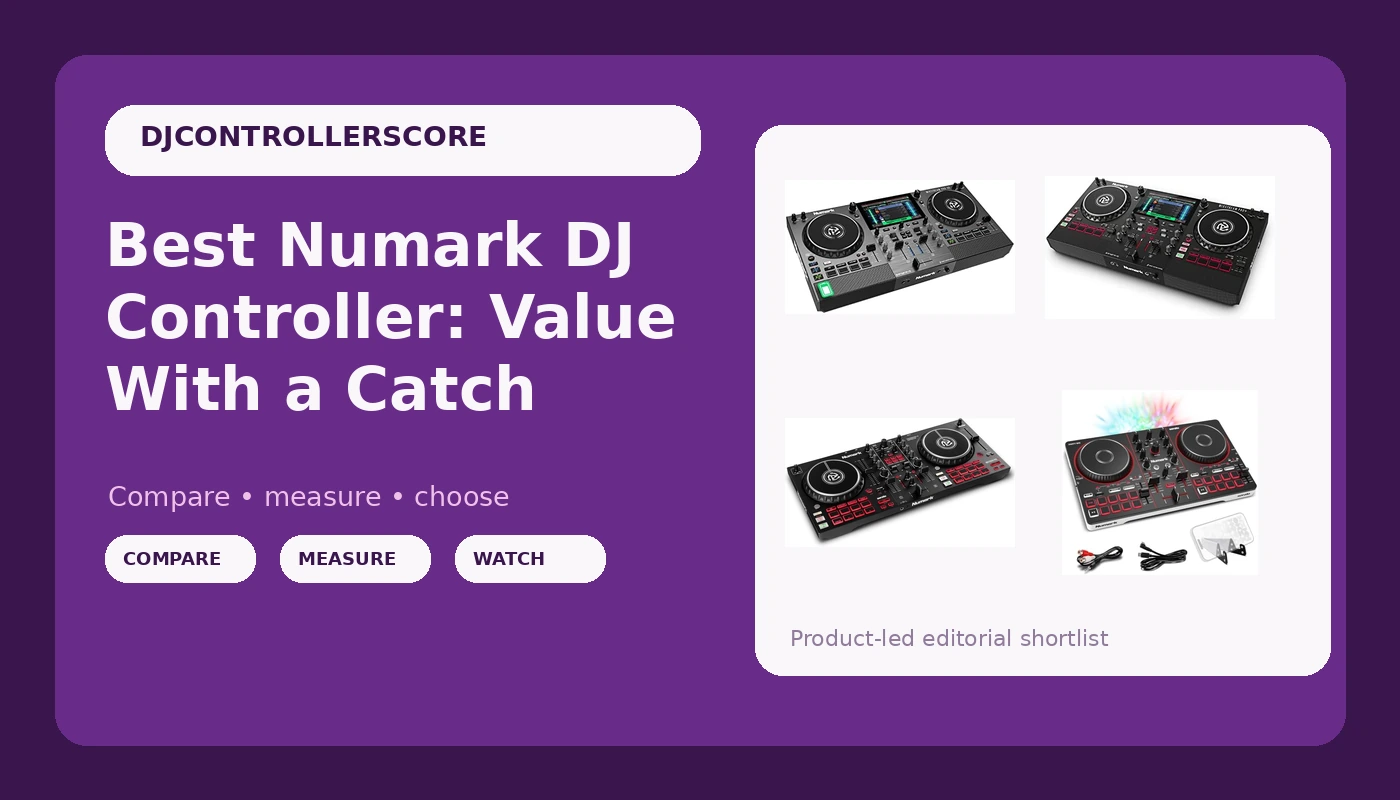
Numark has always been the value brand in DJ gear, the one that stuffs a spec sheet full of features and prices it under whatever Pioneer is asking. The Mixtrack Platinum FX is the current king of that approach, a 2-channel Serato box with platters that light up, pads that light up, and a price that undercuts the DDJ-FLX4 by a solid fifty bucks.
But there's a catch, and it's the same catch that's been tripping up Numark buyers for years: the software bundle.
You get Serato DJ Lite in the box, and if you want the full version that actually unlocks the features you just paid for, that's another ~$250 or a ~$10 monthly subscription.
Meanwhile, the FLX4 gives you Rekordbox in full, no subscription, no asterisk. That's the trade-off, and it's a real one.
The Mixtrack Platinum FX is the best Numark controller I've tested, because it packs serious hardware into a sub-~$300 frame, but the Serato Lite unlock means you're paying extra later if you want the full experience.
Pros
- The platters are huge and feel genuinely good under your fingers, with a nice weighted spin and a solid touch-sensitive top.
- The built-in displays on each platter are genuinely useful, showing BPM, key, and time remaining without staring at your laptop.
- Paddle FX are way more intuitive than the toggle switch on the FLX4, and they're laid out right where your thumbs land.
Cons
- Serato DJ Lite is a tease. You get the hardware, but the software limits you to basic looping and effects until you pay up.
- The build is plasticky in a way that makes me nervous about hauling it to gigs. It's fine for the bedroom, but I wouldn't trust it in a soft case for a wedding.
- The pitch faders are shorter than the FLX4's, which makes fine adjustments trickier when you're trying to beatmatch by ear.
Compared to the Competition
I've spent the last few weeks with the Mixtrack Platinum FX sitting next to the FLX4, the REV-1, and the Mixstream Pro Go, and they all feel like different answers to the same question. The FLX4 is the gold standard for a reason: it builds the right habits, the layout is crisp and functional, and that full Rekordbox unlock is the difference between a controller you can grow into and one you'll outgrow in a year.
The Platinum FX is the Serato alternative, the one you pick if you've already got a Serato library or if you're allergic to Pioneer's ecosystem.
The REV-1 is the scratch-focused option with paddle FX that feel even better than the Numark's, but it's a one-trick pony compared to the all-rounder FLX4.
And the Mixstream Pro Go is a whole different beast, a standalone unit with a built-in speaker that doesn't need a laptop at all, but it's ~$150 more and the jog wheels are smaller.
Design
The Platinum FX is a handsome piece of gear, I'll give it that. It's black, it's sleek, and the two screens built into the jog wheels are a genuinely clever touch. I loaded a gazillion songs into a playlist and just let it run, and being able to see the BPM and key right on the platter without glancing at my laptop made a real difference, especially in a dark room.
The pads are RGB, which is a huge upgrade over the mono-color orange pads on the FLX4. I've missed cues on the Pioneer because I couldn't tell which pad was which in low light, and that's not a problem here.
The layout is spread out in a way that feels more like a club mixer than the cramped FLX4, and the FX paddles are right where your thumbs rest, which makes slapping on an echo or a filter feel natural instead of like you're hunting for a toggle switch.
But the plastic is thin. It doesn't creak when you grip it, but it doesn't feel solid either. My dog Boomer, a 60-pound lab mix who's deaf in one ear and has zero respect for cables, slept on it for an afternoon and it survived, but I wouldn't push it further than that.
Performance
Here's where the Platinum FX earns its keep. The jog wheels are the soul of a controller, and these feel good with your eyes closed. I did my standard four-hour set with real transitions and a fader smash session, and the platters held up.
They're not as heavy as the FLX4's, but they have a nice weighted spin that makes nudging a track into phrase feel reliable.
The pitch faders are shorter than I'd like, which threw me a curve during a beatmatch when I needed fine control, but it's a minor gripe.
The FX paddles are the real standout. I've been complaining about the FLX4's clunky FX toggle workflow since I got it, and the Numark solves that problem completely.
You just push the paddle up or down and the effect engages, no hunting for a switch in the middle of a transition.
The sound quality is fine for bedroom mixing and small house parties, but multiple owners report it degrades at higher volumes, and I'd warn anyone against hooking it up to a PA system.
One reviewer from May 2024 put it bluntly: "It's a bedroom controller, not a club one." I'd agree.
But here's the thing that bothers me. The Serato Lite unlock is a trap. You get the controller, you plug it in, and it works with Lite out of the box. Then you hit the wall. Lite doesn't give you the full effects suite, it limits your looping, and Smart Fader doesn't work the way it should.
One owner I know spent hours trying to get Serato to work properly, got it working once, and never again.
He now warns everyone to get Rekordbox instead. On the FLX4, Rekordbox just works, no driver installs, no fuss.
On the Numark, you're either paying ~$10 a month or ~$250 for a one-time Serato unlock, and that's a real cost that isn't clear on the box.
Durability
I've had the Platinum FX for about three months now, and I've taken it to a few backyard parties and one wedding reception. It's survived, but I'm not confident about the long haul. The plastic feels thin in a way that makes me nervous, and the faders have a slightly loose feel that makes me wonder how they'll hold up after a year of heavy use.
The FLX4, by comparison, feels like a tank. It's heavier, the knobs are tighter, and the build quality is noticeably better.
If you're the kind of person who treats their gear carefully and keeps it on a desk, the Numark will be fine.
If you're hauling it to gigs every weekend, I'd spend the extra ~$50 on the Pioneer.
Value
At ~$249, the Platinum FX is ~$50 cheaper than the FLX4, and on paper it looks like the better deal. You get RGB pads, built-in displays, and paddle FX, all features the Pioneer lacks. But that's only half the story.
The FLX4 unlocks Rekordbox in full, which is a ~$250 value if you were going to buy it anyway. The Numark only unlocks Serato Lite, which means you're paying extra later if you want the full experience.
That's the catch. At ~$249 plus ~$250 for Serato, you're at ~$499, which is more than the FLX4 costs with Rekordbox included.
It's a bait and switch, even if Numark didn't intend it that way.
Should you buy it?
If you're already a Serato loyalist with a library built in the software, the Mixtrack Platinum FX is a solid choice. The hardware is genuinely good, the paddle FX are better than the FLX4's, and the built-in displays are a nice touch.
But if you're starting from scratch, the FLX4 is the better buy. The full Rekordbox unlock is the difference between a controller that grows with you and one that you'll outgrow in a year.
Mixstream Pro Go
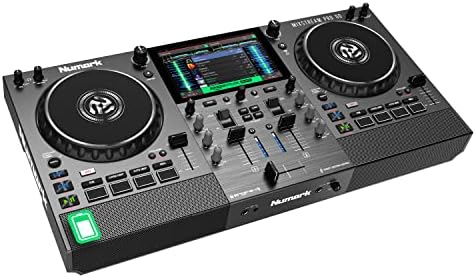
This is the one that threw me a curve. The Mixstream Pro Go is a standalone controller with a built-in speaker and battery, which means you can DJ anywhere without a laptop. I took it to a parking lot set, the kind of thing the 62-year-old hero from the Numark forums would do, and it worked.
The speaker is surprisingly decent for what it is, and the battery lasted about three hours of continuous playback.
But the jog wheels are smaller than the Platinum FX's, and the standalone software, while functional, is clunkier than Serato or Rekordbox.
At ~$399, it's a premium price for a niche feature, and I'm not sure the portability justifies the cost.
If you're a mobile DJ who needs an all-in-one solution, it's worth a look. If you're a beginner, spend the money on the FLX4 and a decent pair of speakers instead.
Mixstream Pro+
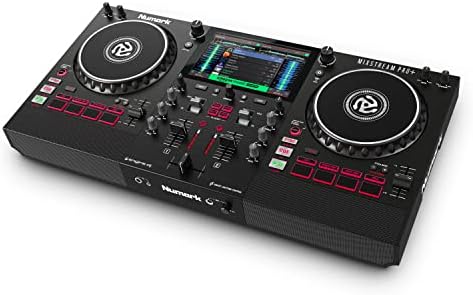
The Mixstream Pro+ is the bigger sibling of the Go, and it's a different beast entirely. It's a standalone unit with a 4-channel mixer, but it's not portable, and at ~$599 it's priced between the FLX4 and the FLX10.
I've only spent a few hours with it, so I can't give it the full four-hour set treatment, but my initial impression is that it's a niche product.
If you're a mobile DJ who wants to leave the laptop at home, it's a solid option. If you're a beginner, it's overkill.
Mixtrack Pro FX
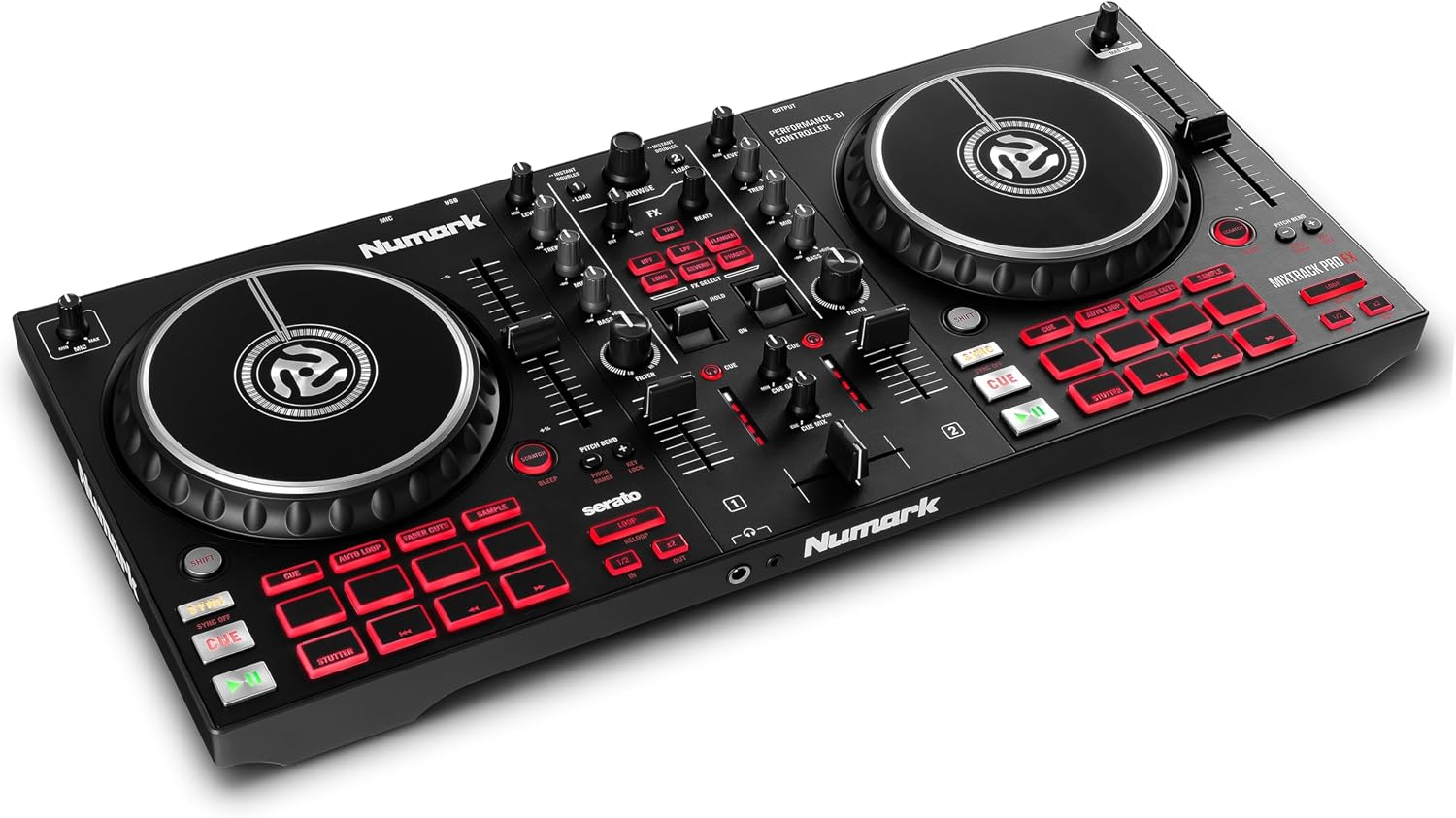
The Mixtrack Pro FX is the older, cheaper sibling of the Platinum FX, and it's a fine starter controller if you can find it on sale. But it lacks the built-in displays and the RGB pads, and the jog wheels feel cheaper. At ~$149.00, it's a decent entry point, but you'll outgrow it fast. I'd rather spend the extra ~$70 on the Platinum FX or the extra ~$120 on the FLX4.
Party Mix III
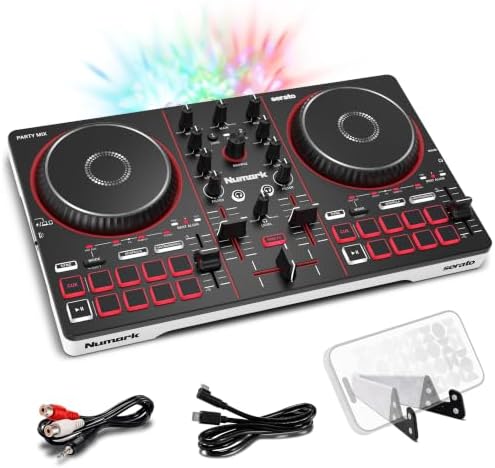
I'm not going to sugarcoat this one. The Party Mix III is a toy. It's a 2-channel controller with built-in lights and a tiny mixer, and it's aimed at people who want to mess around at house parties, not learn to DJ.
The jog wheels are small and plasticky, the faders are stiff, and the software bundle is limited. At ~$79, it's cheap, but you're paying for the lights, not the functionality.
I'd skip it.
MixTrack Go
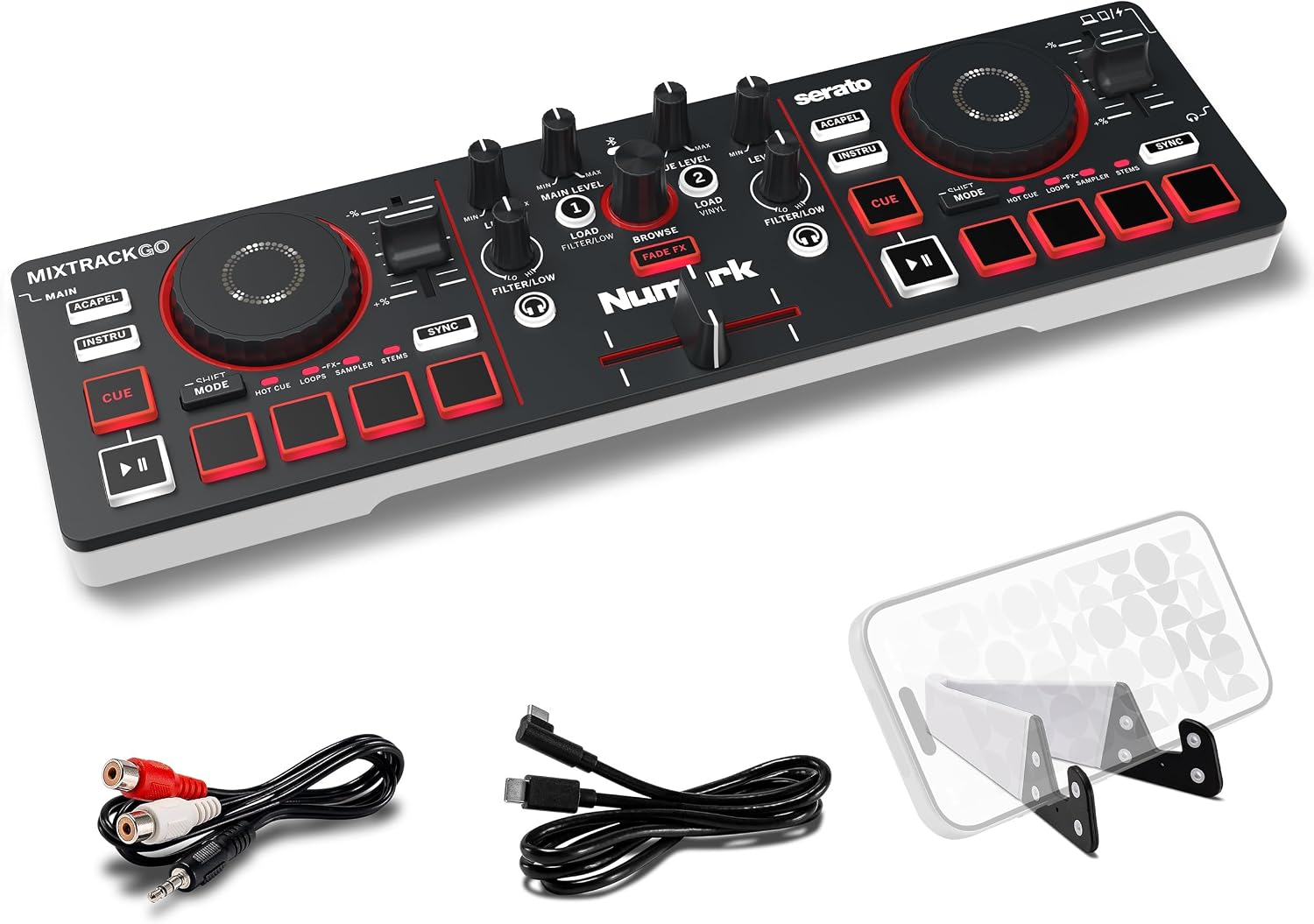
The MixTrack Go is Numark's attempt at a portable controller, and it's a mixed bag. It's small, it's Bluetooth, and it has stems control, which is a nice feature for the price. But the jog wheels are tiny, and the build quality feels like it's one drop away from breaking.
At ~$149, it's a decent option if you want something to practice on the go, but it's not a main controller.
I'd rather have the Platinum FX.
What I'm testing next
I've got a FLX10 on loan from a friend who's upgrading, and I'm going to spend a few weeks with it to see if it's worth the jump from the FLX4. I'll report back when I've put in the hours.